

Marble Floor Cleaning London: 5 Expert Ways to Keep It Spotless
Marble floor cleaning in London homes requires the right approach because one wrong move ruins that beautiful surface forever. I’ve spent over twenty years restoring marble floors across London at Master Marble, and I can tell you most people are cleaning their marble completely wrong.
The thing is, marble isn’t like other floors. Because it’s calcium carbonate, acids destroy it. Similarly, harsh chemicals etch the surface. Therefore, you need specific techniques that actually work without causing damage.
So here are the five essential methods for marble floor cleaning in London that I’ve perfected over two decades. These techniques work in real London homes dealing with hard water, dirt, and daily wear. No complicated nonsense. Just what actually works.
Method 1: Daily Dust Mopping for Marble Floors
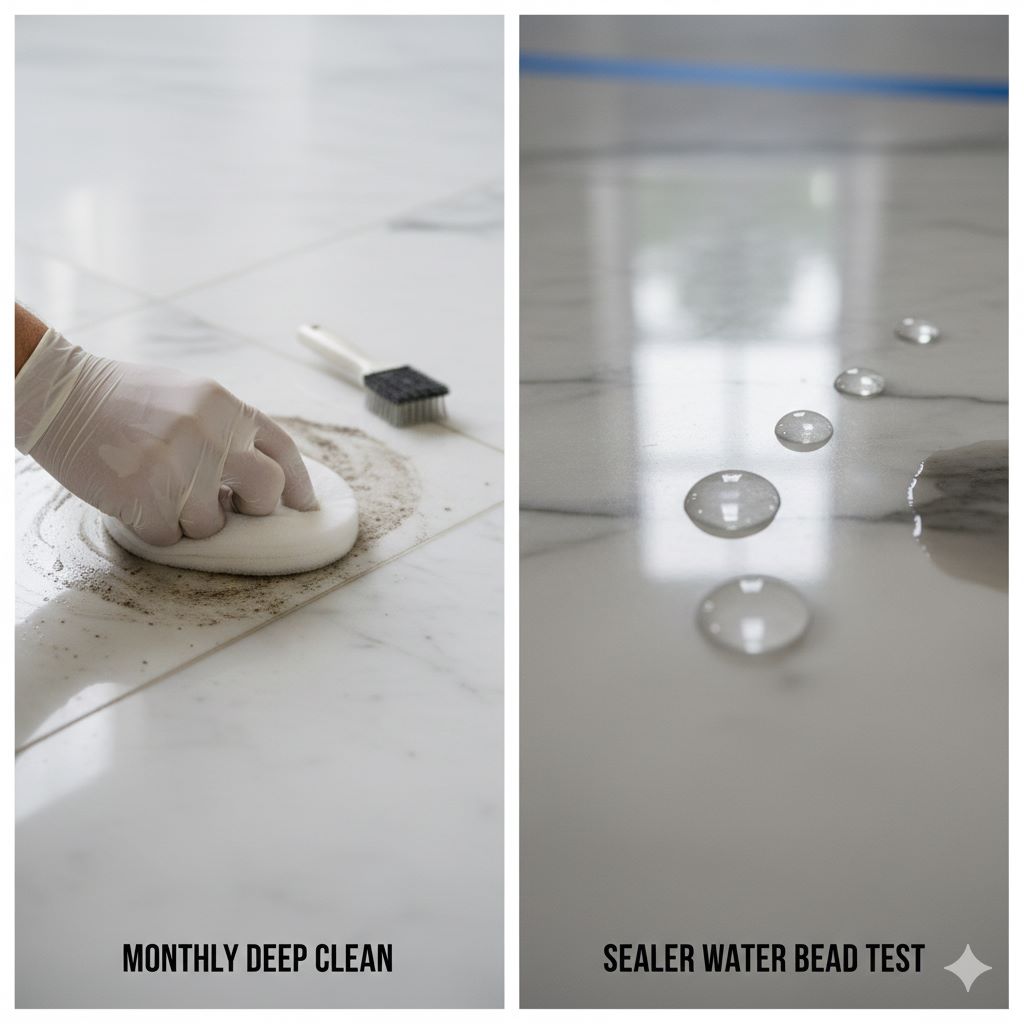
This sounds boring. However, it’s the most important thing you’ll do for your marble floor cleaning routine.
Grit is marble’s worst enemy. Because when people walk across your floor, that grit acts like sandpaper under their feet. Consequently, it scratches the polished surface. Those tiny scratches accumulate. Then your marble looks dull.
Here’s what works. Get a microfibre dust mop. Not those old string mops. Microfibre actually traps dirt instead of pushing it around. Therefore, use it every single day in high traffic areas.
In my experience working across London, hallways need daily mopping. Kitchens need it twice daily if you’re cooking regularly. For instance, kitchens get oil droplets that stick to marble. Similarly, bathrooms get soap scum.
The technique matters too. Don’t just push the mop back and forth. Instead, use long sweeping strokes in one direction. Then pick up the mop and start again.
Takes three minutes. Saves you thousands in restoration costs. Because prevention beats cure every time with marble floor cleaning.
Method 2: Weekly Washing with pH Neutral Cleaner
Right, here’s where most people mess up their marble floor cleaning in London. They use the wrong products. Then they wonder why their marble looks etched and dull.
You need a pH neutral cleaner specifically made for marble. Not multi-purpose cleaner. Not Flash. Definitely not bleach or vinegar. According to the Natural Stone Institute, pH neutral means it won’t react with calcium carbonate.
Good brands include LTP, Lithofin, and Fila. They’re not expensive. In fact, a bottle lasts months because you dilute them. Available from tile shops or online.
Here’s the process that works. First, dust mop the floor thoroughly. Because if you mop over grit, you’ll scratch the marble. Then mix your pH neutral cleaner according to instructions. Usually about a capful per bucket of warm water.
Use a well-wrung microfibre mop. This is important. Too much water sits in grout lines and causes problems. Therefore, your mop should be damp, not soaking wet.
Mop in sections. For example, do about 2 square metres at a time. Then immediately dry that section with a clean cloth or dry mop. Never let water sit on marble. London’s hard water leaves calcium deposits when it evaporates.
The drying step separates proper marble floor cleaning from amateur attempts. In addition, it prevents water spots that make your floor look cloudy.
Method 3: Immediate Spill Response
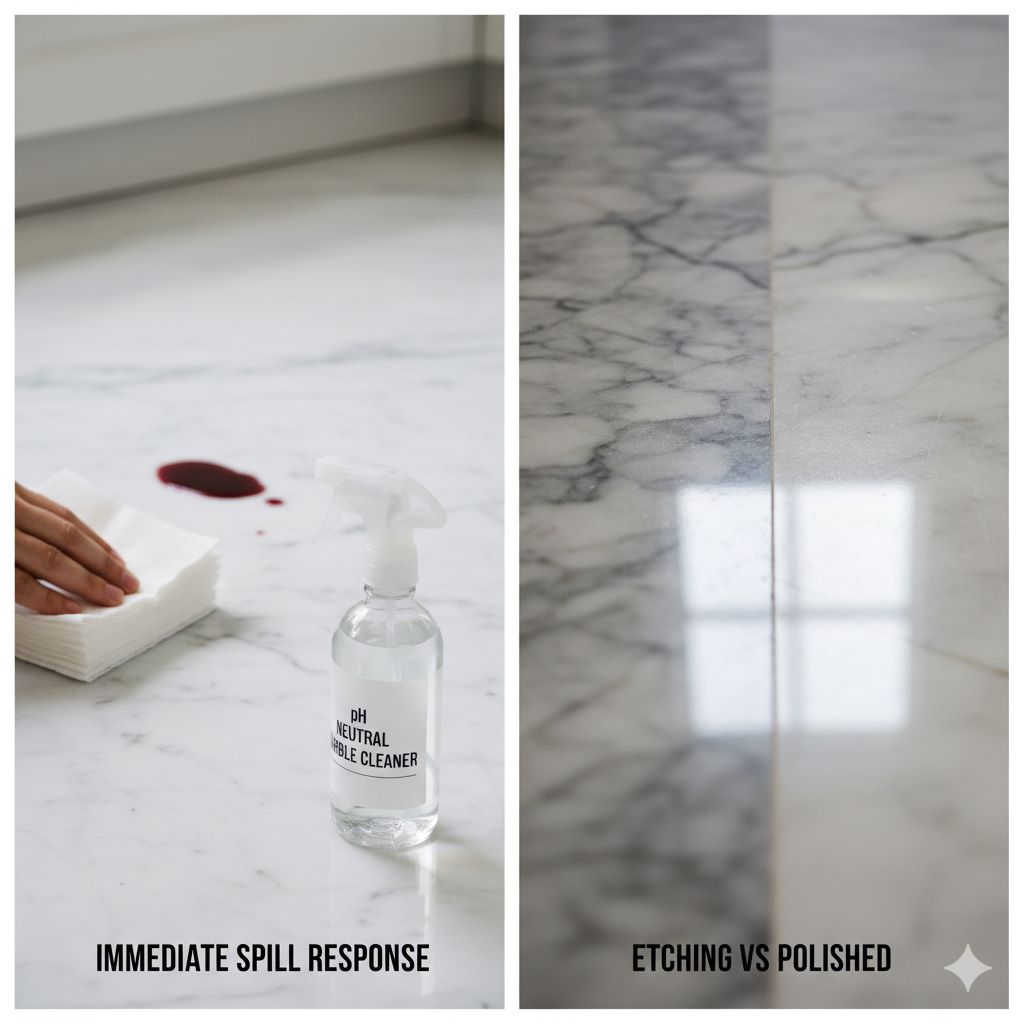
This method saves more marble floors than any other technique. Because marble is porous, liquids soak in fast. Therefore, your response time determines whether you get a stain or not.
Here’s what happens with common spills. Wine soaks into marble in about 30 seconds on unsealed stone. Coffee takes maybe 60 seconds. Consequently, the clock starts ticking the moment something spills.
The right response? Blot immediately. Don’t wipe. Blotting lifts the liquid up. In contrast, wiping spreads it around. Use a clean cloth or kitchen roll. Press down firmly and lift. Repeat until you’ve absorbed all the liquid.
Then clean the area with your pH neutral marble cleaner. Spray it on or apply with a damp cloth. Wipe clean. Dry thoroughly. This whole process should take less than two minutes.
What about dried spills? If something has already dried on your marble floor, don’t scrub it. Instead, wet the area with plain water. Let it sit for a few minutes. Then gently wipe with a soft cloth and your cleaner.
For sticky substances like jam, use a plastic scraper first. Hold it at a low angle to avoid scratching. Then clean with your marble floor cleaning solution.
London homes deal with specific challenges. Red wine at dinner parties. Coffee in the morning rush. Kids’ juice boxes. Therefore, keep cleaning supplies handy in every room with marble.
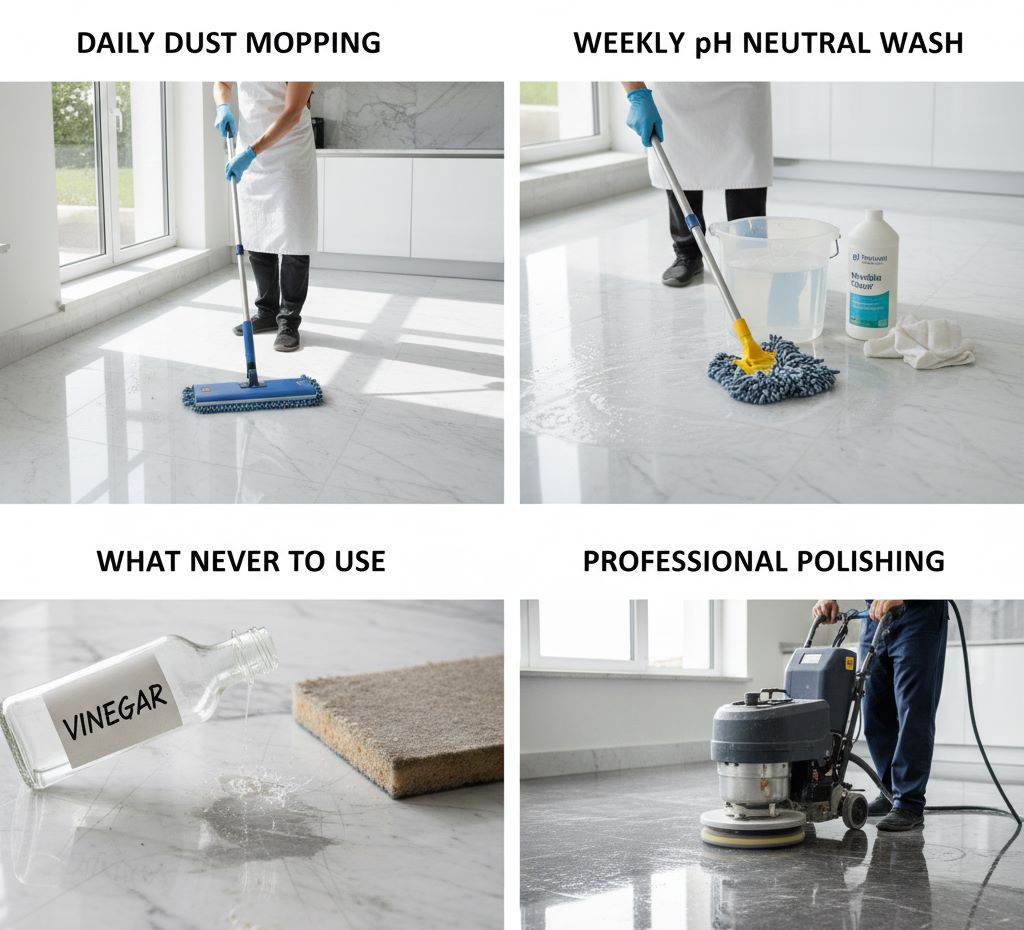
Method 4: Monthly Deep Cleaning of Marble Floors
Even with perfect daily and weekly marble floor cleaning in London, you need monthly deep cleaning. Because dirt builds up in microscopic pores. Similarly, cleaning product residue accumulates. Consequently, your marble starts looking dull.
Here’s the proper technique. First, do your normal dust mopping and washing. Then mix a slightly stronger solution of your pH neutral cleaner. About double the normal concentration. However, still pH neutral.
Apply this to the floor in small sections. Let it sit for about 5 minutes. This gives the cleaner time to break down grime. Then scrub gently with a soft brush or white pad. Not a scouring pad. Those scratch marble.
The Stone Federation Great Britain recommends using brushes with soft nylon bristles for marble floor cleaning. Work in circular motions. Don’t press too hard.
Rinse thoroughly with clean water. This is crucial. Because any cleaner residue left on the marble will attract dirt. Then dry everything completely with clean cloths.
Pay special attention to grout lines. They trap dirt and discolour over time. Therefore, use a small brush to clean grout separately.
After deep cleaning, your marble floor should look noticeably brighter. If it doesn’t, you might need professional restoration.
Method 5: Professional Polishing and Sealing
Right, this is where DIY marble floor cleaning ends and professional work begins. Because some things you simply can’t do yourself.
Marble floors need professional polishing every 1 to 3 years depending on traffic. High traffic areas like hallways need it annually. In contrast, bedrooms might go three years. This isn’t optional. It’s essential maintenance.
What is polishing? We use diamond abrasives to remove a microscopic layer of marble. This eliminates scratches, etching, and dullness. Then we progressively refine the surface to bring back that glossy finish. You can’t achieve this with shop-bought products.
Sealing is different from polishing. A sealer soaks into the marble’s pores and creates a barrier against stains. However, it doesn’t fix existing damage or restore shine. Therefore, polish first, then seal.
How often should you seal? Test it every six months. Splash some water on your marble floor. If it beads up nicely, your seal is good. However, if it soaks in and darkens the marble, time to reseal.
You can reseal yourself using products from companies approved by The Tile Association. Clean the floor thoroughly first. Apply the sealer according to instructions. Let it cure for 24 hours before using the floor.
But polishing needs professionals. We’ve got industrial equipment, diamond pads, and twenty years of experience. At Master Marble, we offer professional marble restoration London services including polishing, sealing, and repair.
What Never to Use for Marble Floor Cleaning
Let’s talk about what ruins marble floors. Because knowing what not to do is just as important.
Vinegar and lemon juice. These are acidic. Therefore, they etch marble on contact. Similarly, most bathroom cleaners contain acid.
Bleach. It’s too harsh for marble. In addition, it can discolour some types.
Abrasive cleaners. Products like Ajax contain grit that scratches. Similarly, magic erasers are fine abrasive that dull the surface.
Steam mops. The intense heat can damage the sealer. Use them occasionally if needed. However, not daily.
Here’s a simple rule for marble floor cleaning in London. If it removes limescale, don’t use it on marble. Because limescale removers are acidic.
Common Marble Floor Cleaning Problems in London
Working across London for twenty years, I see the same issues repeatedly. Here’s how to handle them.
Hard water marks. London water is quite hard. Therefore, when water evaporates, it leaves calcium deposits. For light marks, wipe with rubbing alcohol and water. Then dry immediately. Heavy buildup needs professional treatment.
Etching from acidic spills. This looks like dull spots where the shine is gone. Light etching can be polished out. However, heavy etching needs professional restoration.
Oil stains. Common in kitchens. Mix baking soda with water to make a thick paste. Spread over the stain. Cover with plastic wrap. Leave for 24 hours. Then remove and clean.
Dull appearance despite cleaning. This means your marble needs professional polishing. Because no amount of marble floor cleaning will restore shine once the surface is damaged.
Quick Reference Guide for Marble Floor Cleaning
**Daily:** Dust mop high traffic areas. Blot any spills immediately.
**Weekly:** Wash with pH neutral cleaner. Then dry thoroughly with microfibre cloths.
**Monthly:** Deep clean with stronger pH neutral solution. After that, rinse and dry completely.
**Every 6 months:** Test your sealer. If water soaks in, therefore reseal the floor.
**Every 1-3 years:** Professional polishing. Because this restores the shine and removes damage.
**Never use:** Vinegar, lemon juice, bleach, bathroom cleaners, abrasive cleaners, or anything acidic.
**Always use:** pH neutral marble cleaners, soft microfibre mops and cloths, plastic scrapers for dried spills.
When to Call Professional Marble Floor Cleaning Services
Some situations need professional help. Here’s when to stop DIY marble floor cleaning and call experts.
Deep stains that won’t respond to home treatments. For instance, rust stains or old oil stains. These need industrial strength solutions.
Extensive etching across the floor. If large areas are dull and damaged, professional polishing is the only fix.
Cracks or chips. These need repair before you continue marble floor cleaning. Because water gets into cracks and causes more damage.
Lost shine despite proper cleaning. This means the surface is too scratched for cleaning to help. Therefore, professional polishing is needed.
Final Thoughts on Marble Floor Cleaning London
Marble floor cleaning in London doesn’t have to be complicated. However, it does need to be done correctly. Because marble is expensive and beautiful but also vulnerable to damage.
The five methods I’ve shared work. I know because I’ve used them across hundreds of London homes over twenty years. Daily dust mopping prevents scratches. Weekly washing keeps it clean. Immediate spill response prevents stains. Monthly deep cleaning removes buildup. Professional polishing restores shine.
Follow these techniques and your marble floors will look stunning for decades. Ignore them and you’ll be calling us to fix damage that could have been prevented. The choice is yours.
At Master Marble, we provide professional marble floor cleaning London services including polishing, sealing, and repair. Because we understand that sometimes DIY maintenance isn’t enough. Sometimes you need experts who’ve spent twenty years perfecting these techniques.
Your marble floor is an investment. Therefore, treat it right and it’ll reward you with timeless beauty. Need help? We’re here.