

Natural Stone Floors London: Complete Care Guide
You spent good money on those natural stone floors in your London home. Whether it’s marble in the hallway, granite in the kitchen, or limestone in the bathroom, it looked stunning when it went in. Now you need to keep it that way.
The thing is, most people don’t have a clue how to look after natural stone floors in London properly. Because of this, they use the wrong products. They make basic mistakes. Then they wonder why their expensive floor looks rubbish after a couple of years.
I’ve been working with natural stone floors in London for over two decades at Master Marble. Because of this experience, I see the same mistakes keep coming up. Homeowners mean well, however they’re getting bad advice from the internet or using whatever’s under the kitchen sink.
So let’s sort this out. Here’s what you actually need to know about caring for natural stone floors in London. No complicated nonsense. Just straightforward advice that works.
Why Natural Stone Floors in London Need Different Treatment
Stone isn’t like vinyl or ceramic tiles. Therefore, you can’t just slap any old cleaner on it.
Natural stone floors are porous. This means they’ve got tiny holes throughout that can absorb liquids. For instance, spill red wine on sealed stone and you might get away with it if you’re quick. However, leave it an hour on unsealed stone and you’ve got a permanent stain.
Some stones are worse than others. For example, marble and limestone are quite porous and sensitive to acids. In contrast, granite is tougher but still needs care. Similarly, travertine has actual visible holes in it that trap dirt.
London makes things harder for natural stone floors. Because of hard water, you get calcium deposits. We track in dirt constantly because of the weather. Damp gets everywhere. Your stone floor has to deal with all this.
Different stone types need different approaches. For instance, what works for granite might damage marble. According to the Stone Federation Great Britain, understanding your specific stone type is essential for proper care. So let’s break it down by stone type so you know what you’re dealing with.
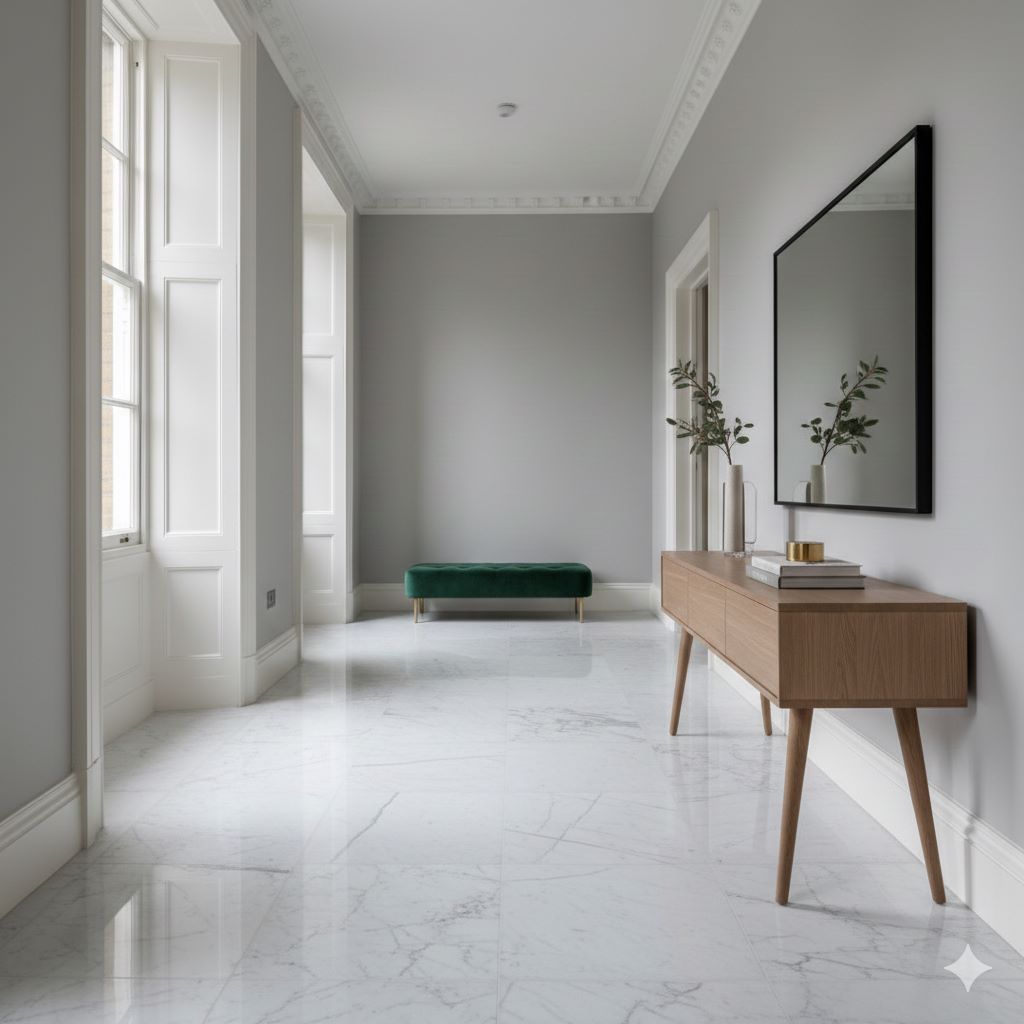
Caring for Marble Stone Floors in London
Marble looks absolutely beautiful when it’s properly cared for. That smooth surface with natural veining. Classic elegance. However, it’s quite fussy.
The problem with marble is calcium carbonate. That’s what marble is made from. Because of this composition, acids react with calcium carbonate and dissolve it slightly. This creates dull marks called etching that won’t come out with cleaning.
What counts as acidic? Wine. Coffee. Orange juice. Tomato sauce. Vinegar. Lemon. Most bathroom cleaners. In fact, even some fruits if you drop them and they sit there.
For daily cleaning, therefore, use warm water and a proper stone cleaner. pH neutral means it won’t damage the stone. So avoid anything that says it removes limescale because that definitely contains acid.
Wipe up spills immediately. Not in five minutes. Now. Because waiting allows the liquid to soak in. Use a cloth to blot it up rather than wiping it around. Then clean with your stone cleaner and dry it properly.
Get your marble sealed every 12 to 18 months. The sealer soaks into the pores and stops liquids getting in. For instance, water should bead up on sealed marble. However, if it soaks in and darkens the stone, it’s time to reseal.
Granite Stone Floors and Worktops Care
Granite is much tougher than marble. It’s a harder stone, more resistant to scratching. In addition, it doesn’t etch from acids like marble does. This makes it easier to live with.
However, granite still needs sealing. Oil and grease can soak in if the stone isn’t protected. Kitchen granite especially needs good sealing because of cooking oils.
Clean granite with pH neutral stone cleaner and warm water. You can get away with slightly stronger products than you’d use on marble. However, there’s no need. The gentle stuff works fine.
Don’t use those granite polishing sprays from supermarkets. Because they leave a buildup that makes the floor look cloudy over time. So just clean it properly with the right products.
Test your granite sealer annually. Splash some water on it. For instance, a good seal means the water beads. However, if it soaks in, reseal. Most granite needs resealing every year or two depending on traffic.
Limestone Stone Floors in London Homes
Limestone is basically marble’s country cousin. Similar composition, similar problems with acids. However, it often has a bit rougher texture.
Everything that applies to marble applies to limestone. No acids. pH neutral cleaners only. Immediate spill cleanup. Regular sealing. Therefore, treat it with the same care you’d give marble.
Limestone sometimes comes with a naturally textured surface. Because of this, it can trap dirt more easily than smooth marble. Consequently, you might need to clean it more thoroughly to get grime out of the texture.
Some limestone is quite soft. So be careful dragging furniture across it. Use felt pads under chair legs. In fact, grit on people’s shoes will scratch it faster than harder stones.
Travertine
Travertine has those characteristic holes. Some tiles come filled. Others don’t. Either way, those holes need attention because dirt gets trapped in there.
Regular mopping won’t shift it. You need to actually clean into the holes with a soft brush occasionally. Therefore, maintenance requires a bit more effort than smooth stone.
Travertine reacts to acids like limestone does. So keep acidic things away from it. Use pH neutral cleaners. Similarly, seal it regularly to protect the surface.
The Products You Should Actually Use
Right, let’s talk about cleaning products. This is where people go wrong most often.
First, get a proper pH neutral stone cleaner. Brands like LTP or Lithofin make good ones. They’re not expensive. In fact, a bottle lasts ages because you dilute them. The Natural Stone Institute recommends pH neutral cleaners for all natural stone types. Available from tile shops or online.
For daily cleaning, that’s all you need. Stone cleaner diluted in warm water. Mop the floor. Done. Therefore, no fancy products required.
For sealing, use proper stone sealer from a specialist manufacturer. The stuff in B&Q might work. It might not. However, proper stone sealers from companies like Fila or LTP are worth the extra few quid. Professional stone care companies like those listed by The Tile Association recommend using industry-approved sealers.
What not to use? Vinegar because it’s acidic. Bleach because it’s too harsh. Bathroom cleaners because they’re usually acidic. Similarly, Flash or other general purpose cleaners are too alkaline. In addition, anything that says limescale remover is definitely acidic.
Also avoid those spray and wipe products from supermarkets. Because they often leave residue that builds up. This makes your floor look dull and slightly sticky

Daily Maintenance for Natural Stone Floors
Good daily habits prevent most problems before they start. Not complicated. Just consistent.
Sweep or vacuum every day in high traffic areas. This sounds excessive, however it really helps. Because grit acts like sandpaper under people’s feet. Therefore, get it off the floor quickly so it can’t scratch the surface.
Mop weekly with your pH neutral stone cleaner. More often in kitchens or if you’ve got kids tracking mud through. In contrast, less often in rarely used rooms.
Deal with spills straight away. In fact, this is probably the most important rule. Blot them up immediately. Don’t let things sit on the stone.
Dry the floor properly after mopping. Because standing water isn’t great for natural stone even if it’s sealed. So run over it with a dry mop or cloth.
Put decent doormats at every entrance. They catch grit before it gets onto your stone. However, make sure they’re proper ones that actually work, not decorative ones that do nothing.
What Damages Natural Stone Floors
Let me tell you what ruins natural stone. These are the things I see constantly when people call us to fix their floors.
Using acidic cleaners. Bathroom cleaners with limescale removers are the worst. For instance, people use them on stone floors thinking they’re being thorough. However, they’re actually dissolving the surface.
Leaving spills. Red wine on marble overnight will stain. Coffee on limestone does the same. Therefore, clean it up when it happens.
Never sealing the stone. Some people don’t realize stone needs sealing. Others forget to reseal when the old sealer wears off. Either way, unsealed stone is vulnerable.
Dragging furniture without protection. Metal chair legs scratch stone. Similarly, moving a sofa across marble without lifting it properly causes damage.
Using those steam mops every day. Occasional steam cleaning is fine. However, daily steam mopping drives moisture deep into the stone. Consequently, this can cause problems.
Letting hard water dry on the surface. In London our water is quite hard. Because of this, if you let it evaporate on stone, calcium deposits build up. They look awful and they’re hard to remove.
Dealing with Stains
Despite your best efforts, stains happen. Here’s how to tackle them.
Fresh stains need immediate action. First, blot them up. Don’t rub. Then use your stone cleaner and clean the area thoroughly. After that, rinse with clean water. Finally, dry it properly.
Old stains that have soaked into unsealed stone are harder. You can make a basic poultice with baking soda and water. Mix it to a thick paste. Then spread it over the stain. Cover with plastic wrap. Leave it 24 hours. Finally, scrape it off and clean the area.
For stubborn stains, however, professional help is worth it. Because sometimes grinding and repolishing is the only answer for really deep staining.
When to Call Professionals
Some things you can handle yourself. Others need professional equipment and expertise.
Regular cleaning and resealing are DIY friendly once you know what products to use. In fact, annual maintenance is something most homeowners can manage.
However, deep scratches need professional attention. Because we use diamond abrasives to grind out damage and repolish the surface. You can’t do that with supermarket products.
Extensive etching from acids needs grinding and refinishing. For instance, if your marble floor has lots of dull marks from acidic cleaners, DIY fixes won’t work.
Lost shine across the whole floor means it needs professional polishing. This involves machinery you probably don’t have access to. Therefore, call in the experts.
Heavy staining that won’t respond to home treatments needs industrial strength solutions. Sometimes we need to grind away the stained stone.
Similar to our marble restoration London services, proper stone care starts with understanding what your floor needs. Sometimes that’s just good daily maintenance. However, sometimes it needs professional intervention.
Common Mistakes to Avoid
Using the wrong mop. Sponge mops hold too much water. Therefore, use a microfibre mop that’s just damp.
Thinking natural stone cleaners are expensive. A £15 bottle lasts months when diluted. So it’s actually quite economical.
Assuming all stone is the same. For instance, what’s safe for granite might damage marble.
Mixing your own cleaning solutions. However, it’s better to just buy proper stone cleaner.
Forgetting to reseal. Check annually. Then reseal when water stops beading.
Being too aggressive with scrubbing. Because gentle regular cleaning beats occasional harsh scrubbing.
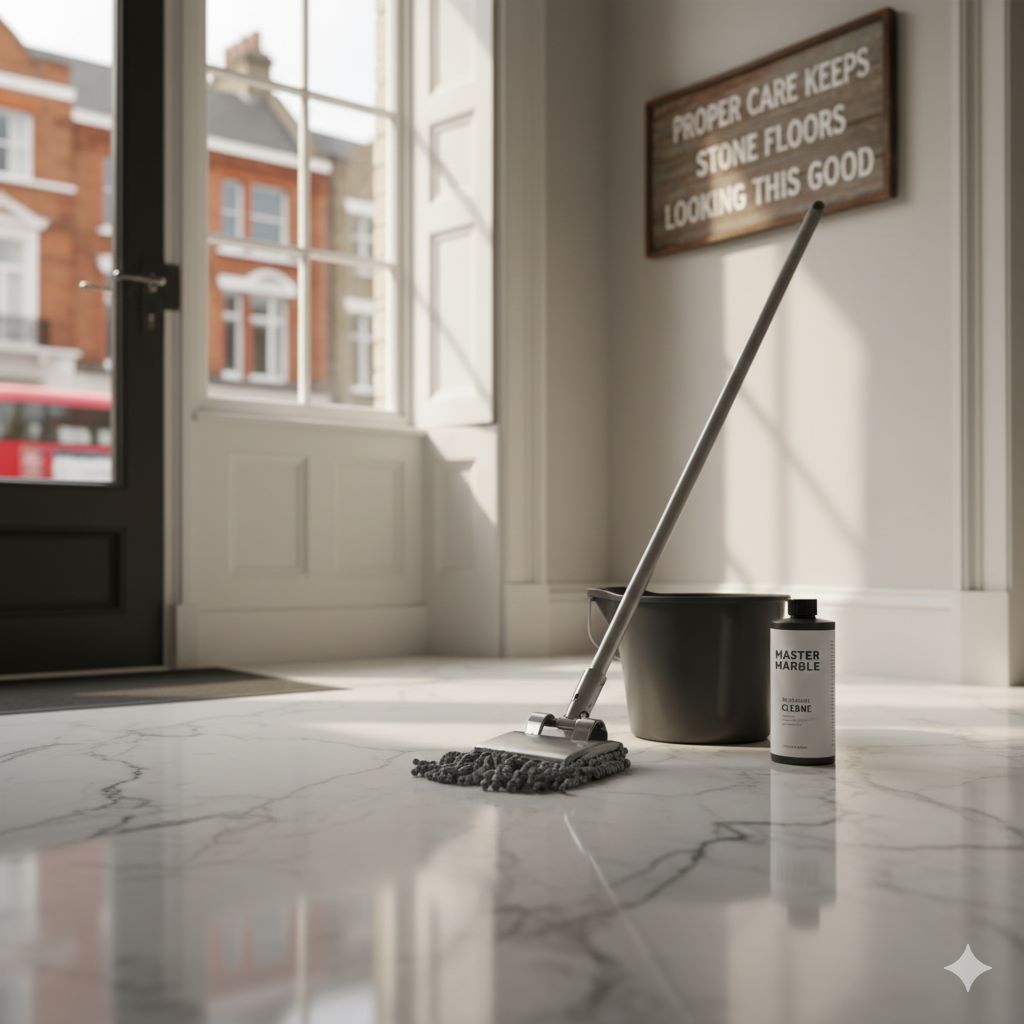
Quick Reference Guide
Daily: First, sweep or vacuum high traffic areas. Then wipe spills immediately.
Weekly: Mop with pH neutral stone cleaner. After that, dry the floor.
Annually: Test your sealer. If water soaks in rather than beading, then reseal.
Never: Don’t use acidic cleaners or bleach. Similarly, don’t let spills sit on stone.
Products needed: pH neutral stone cleaner. Also, proper stone sealer. In addition, a microfibre mop. Finally, good doormats.
Is It Worth the Effort
Natural stone does need more care than ceramic. However, it’s not difficult. Just different. In fact, once you’ve got the right products, it’s straightforward.
The payoff is worth it. Because natural stone looks better than any alternative. Each piece is unique. Moreover, properly cared for, it lasts for decades.
Regular maintenance prevents expensive problems. Therefore, ten minutes a week protects your investment.
Final Thoughts on Natural Stone Floors London
Caring for natural stone floors in London isn’t complicated. First, use pH neutral cleaners. Then wipe up spills immediately. Seal regularly. Sweep daily. Finally, avoid acids.
Follow these basics and your natural stone floors will look great for years. However, ignore them and you’ll need professional restoration.
At Master Marble, we see both extremes. Twenty year old floors still looking fantastic. In contrast, three year old floors needing restoration. The difference is maintenance.
Your floor is a big investment. Therefore, look after it properly and it’ll last decades. Need help? We provide professional cleaning, sealing, and restoration across London. Because of our 20 years of experience, we’ve seen everything.