

Travertine Floor Restoration London: How to Bring Your Stone Floors Back to Life
Welcome to our comprehensive guide on travertine floor restoration in London, crafted by experts with over 20 years of experience. When your travertine floor was first installed, it looked absolutely beautiful. Those warm honeyed tones caught the light perfectly, while the natural veining added character to every room. That soft Mediterranean feel transformed your hallway into something special.
However, fast forward a few years and the picture is quite different. Now, the high traffic areas have gone dull and lifeless. Moreover, white marks have appeared near the kitchen sink that no amount of scrubbing will shift. Additionally, those characteristic little holes are now filled with black grime. Unfortunately, the shine you loved has completely vanished.
Fast forward a few years and the picture is quite different. The high traffic areas have gone dull and lifeless. White marks have appeared near the kitchen sink that no amount of scrubbing will shift. Those characteristic little holes are now filled with black grime. The shine you loved has completely vanished.
You have probably tried every cleaning product on the market. Spent hours scrubbing on your hands and knees. Maybe even hired a regular cleaning company. Nothing has worked because travertine is not like ceramic or porcelain. It is a natural stone that needs specialist treatment when it gets to this stage.
This is where professional travertine floor restoration London comes in. At Master Marble, we have been restoring natural stone floors for over 20 years. We know exactly what travertine needs to look its best again.
What Makes Travertine Different from Other Stone: Travertine Floor Restoration London
Travertine forms around hot springs where calcium rich water bubbles up from deep underground. As the water evaporates, it leaves behind layers of limestone. The gas bubbles that were trapped during formation create those distinctive holes you see in every tile.
This natural formation process gives travertine its unique beauty. Each tile is different. The colouring varies. The patterns are never quite the same. This is what makes it so appealing for homes across London. We provide best services for travertine floor restoration London.
The one downside thing about travertine is that it is softer than granite and more porous than most other marble and stones. When you spill red wine on sealed granite, you can probably clean it up an hour later with no lasting damage. Try that with unsealed travertine and you will have a permanent stain that has soaked deep into the stone. So that is one downside having travertine that is why it needs special care.
London properties face particular challenges with travertine. Our hard water leaves mineral deposits on the surface. We track in constant dirt and grit from the pavements. The damp British weather means moisture is always an issue. All of these factors speed up the deterioration of travertine floors.
Eventually you reach a point where normal cleaning is not enough. The damage has gone too deep. That is when you need proper restoration to actually fix the problems rather than just clean the surface.
How to Tell When Your Travertine Needs Professional Help
Most homeowners wait far too long before calling in specialists. They assume a bit of dullness is just normal wear and tear. A few scratches do not seem worth worrying about. Then one day they really look at their floor properly and realise how bad it has become.
The Surface Has Lost All Its Shine
Walk from your living room into your hallway. Notice how the floor looks completely different in the areas where people walk compared to the corners and edges. This is not dirt that cleaning will remove. The actual surface of the stone has been worn down by thousands of footsteps.
Every time someone walks across your floor, tiny particles of grit on their shoes act like sandpaper. Over months and years this gradually abrades the surface. The stone becomes rough and pitted instead of smooth. The natural lustre disappears completely.
You can clean this floor every single day and it will still look dull. The shine is gone because the stone itself has been damaged. Only grinding and polishing will bring it back.
Strange White Marks Have Appeared
Those chalky white spots that have appeared, particularly around wet areas, are called etching. This happens when something acidic comes into contact with the travertine. Lemon juice, wine, vinegar, bathroom cleaners with descaling agents, even some fruits can cause this.
The acid literally dissolves a tiny amount of the calcium carbonate that makes up the stone. It leaves behind a dull mark that feels slightly rough to the touch. This is not a surface stain that sits on top of the stone. The acid has actually eaten into the structure.
No amount of scrubbing will remove etching. The damaged stone needs to be ground away and the surface refinished. This is one of the most common problems we see with travertine in kitchens and bathrooms across London.
You Can Feel Scratches When You Touch the Floor
Run your hand slowly across different parts of your travertine floor. Do you feel grooves and scratches? These might have come from furniture being dragged across the room during decorating. Pet claws scratching as dogs run through the hallway. Builders dropping tools during that extension you had done.
Once travertine gets scratched, dirt gets trapped in those grooves. This makes the scratches look darker and more obvious over time. Even though no new damage is happening, the existing scratches become increasingly noticeable as grime builds up.
The Natural Holes Look Black and Filthy
Every piece of travertine has holes and pits. This is a natural part of how the stone forms. Some tiles come from the factory with these holes already filled, but the filler can break down over time. Other tiles are sold with the holes left open.
These holes become dirt traps. Years of grime, grease from cooking, soap residue, and general household dirt get pushed into them. They turn black and look absolutely awful. You have probably tried cleaning them with toothbrushes and cotton buds and steam cleaners. Nothing works because the dirt is too deeply embedded.
Travertine Floor Restoration London: Process
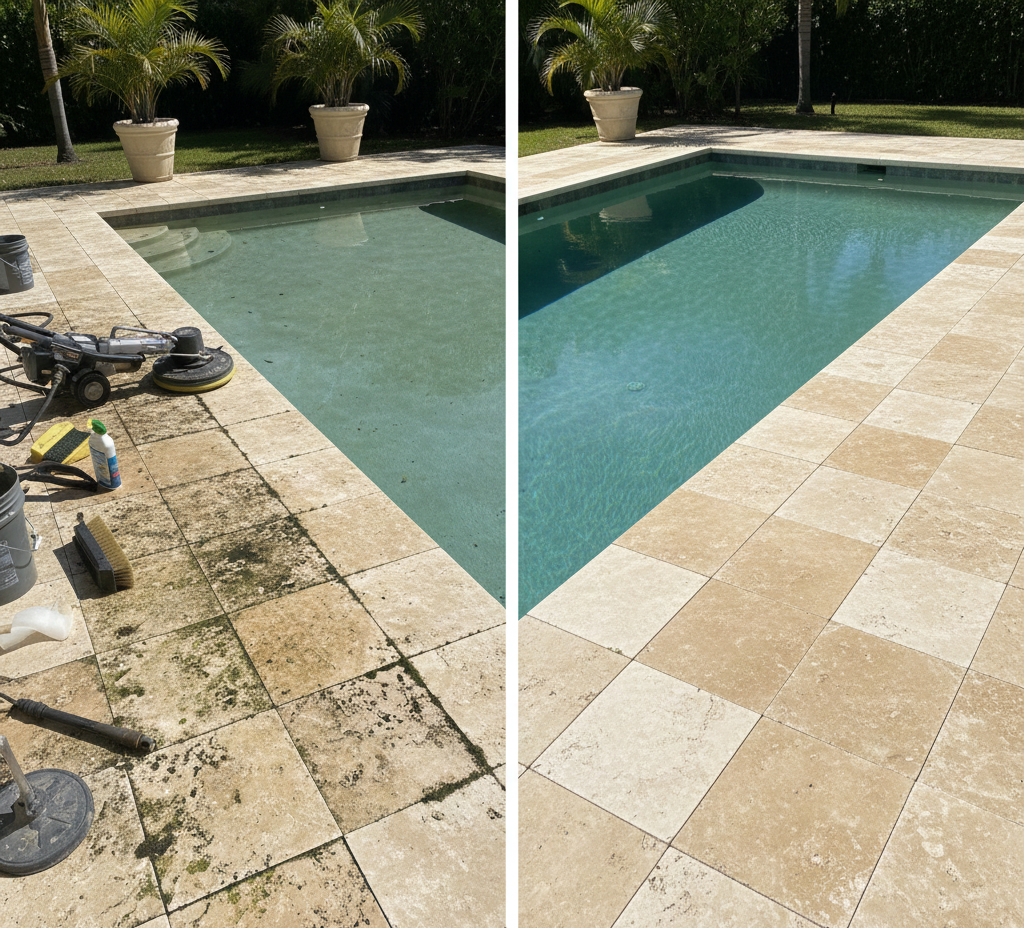
Professional restoration follows a specific sequence of steps. Each stage builds on the previous one. Miss a step or rush through it and the final results will be compromised. This is what we do when restoring travertine floors.
We Start with a Proper Assessment
Before any work begins, someone needs to actually look at your floor in person. You would be amazed how many companies will quote you over the phone without seeing the job. That never ends well.
The assessment tells us how deep the damage goes. Are we dealing with surface dullness that needs light polishing, or deep scratches that require aggressive grinding? Are there any cracked tiles that will need replacing? Is the grout sound or does it need attention?
We also look at the practical aspects. What furniture needs moving? Are there kitchen units that complicate access? What about the skirting boards and door frames? Understanding the whole picture means we can do the job properly without damaging anything else in your home.
Deep Cleaning Comes Next in travertine floor restoration London
The floor gets thoroughly deep cleaned before restoration begins. This is nothing like your weekly mopping. We use professional stone cleaning products that are pH neutral so they will not damage the travertine. Industrial scrubbing machines work the cleaner deep into the stone.
Everything has to come off. Old wax polish that someone applied years ago. Failed sealers that have gone cloudy. Ingrained dirt that has built up over months. If any contamination is left on the surface when we start grinding, it just gets ground into the stone and causes bigger problems.
The grout lines get cleaned at this stage too. Years of dirty mop water have left them grey and discoloured. We get them back to something approaching their original colour before moving on.
Filling the Holes is Specific to Travertine
This step only applies to travertine. If we were doing marble restoration London work, we would skip this part because marble does not have these natural holes. Granite does not need it either. But travertine always does.
We use resin based fillers that are colour matched as closely as possible to your specific stone. Perfect matches are impossible because travertine varies so much, but we get them close enough that once everything is polished you will not notice the filled areas.
The filler gets applied carefully into every hole. Excess is scraped off level with the surface. Then it needs time to cure properly. Usually we leave it overnight. Rushing this stage means the filler fails within weeks or months. Done properly, the filling lasts for many years.
Grinding Removes the Damaged Stone
Now we get to the part that actually fixes the problems. Industrial floor machines fitted with diamond abrasive pads grind away the damaged surface layer of stone. This is not cleaning. We are literally removing stone to reveal fresh, undamaged material underneath.
The process starts with coarse diamond pads. These might be 50 grit or 100 grit depending on how much damage needs removing. These aggressive pads take off quite a bit of stone. Maybe a millimetre or two. This sounds like a lot but travertine floor tiles are typically 12 or 15 millimetres thick. There is plenty to work with.
After the coarse grinding removes all the deep scratches and etching, we move through progressively finer grits. 200 grit removes the scratches left by the 100 grit. 400 grit smooths out the 200 grit marks. We keep going through 800 and 1500 grit until the surface is perfectly smooth and flat.
Proper extraction equipment captures most of the dust and water. Without this you would find stone dust settling on everything in your house for weeks afterwards. Our equipment keeps the mess under control.
Polishing Brings the Stone to Life
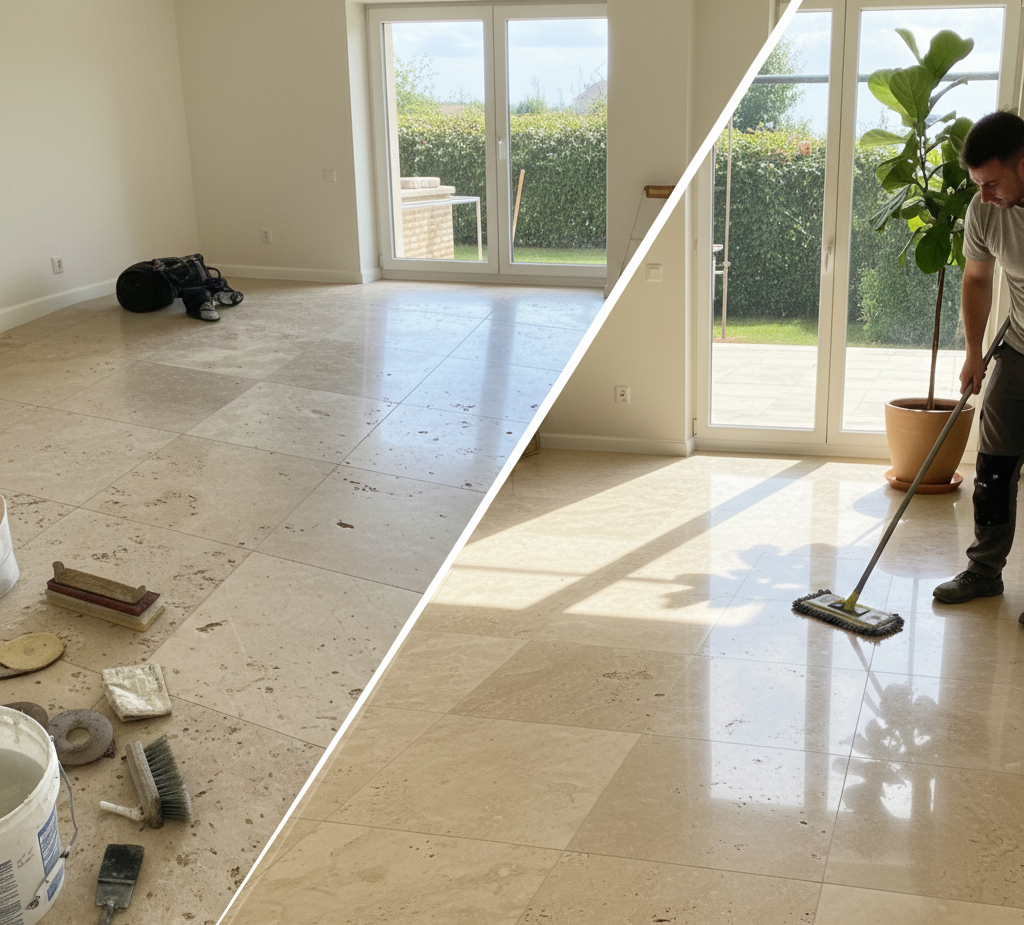
Once the honing stages are complete, polishing brings out the natural beauty of the travertine. We use ultra fine diamond pads, often 3000 grit or higher. These get combined with polishing powders that react with the stone to create that characteristic lustre.
The level of shine is your choice. Most people prefer a satin or honed finish for travertine rather than a high gloss polish. This gives a soft sheen that shows off the stone’s colour without being too formal or slippery. The finish looks elegant without being too much for a family home.
We work the floor systematically with overlapping passes. Natural daylight shows up any areas that need more attention. This stage cannot be rushed. Getting consistent results across an entire floor takes time and experience.
Sealing Protects Your Investment
The final stage is applying a high quality penetrating sealer. These sealers soak into the pores of the stone rather than sitting on the surface like a coating. Think of it like waterproofing a jacket. The fabric can still breathe and let moisture vapour through, but liquid water beads up on the surface instead of soaking in.
Good stone sealers are not cheap. The cheap ones from DIY shops often do not work properly or leave a cloudy appearance. Professional grade sealers from specialist manufacturers give much better results. They protect the stone whilst letting it breathe naturally.
A properly applied sealer on travertine typically lasts 12 to 18 months with normal household traffic. You will know when it needs reapplying because water stops beading on the surface and starts soaking in instead.
Why Travertine Floor Restoration London Makes More Sense Than Replacement
Someone always asks whether they should just replace the floor instead of restoring it. The answer is almost always that restoration is the better choice. Here is why.
The Cost Difference is Substantial
Replacing a travertine floor means ripping up all the existing tiles. This creates a huge amount of mess and waste that needs skipping. You then have to buy new travertine, which is not cheap. Add in adhesive, grout, and several days of professional tiling labour.
Professional restoration typically costs about half what replacement would. Often less if the floor is not in terrible condition. You get results that look as good as new for a fraction of the price.
Your Original Floor Has Character
Travertine that has been down for 10 or 15 years develops a patina. The stone subtly changes with age. It gains character and depth that brand new stone simply does not have. New travertine can look quite bright and uniform, almost artificial in some lights.
Restoration brings out the best in your existing stone. It removes all the damage whilst keeping that aged character that makes the floor special. You get the beauty back without losing what made you choose travertine in the first place.
Disruption is Minimal
Replacing a floor is a major undertaking. Everything has to come out of the room. Kitchen appliances get disconnected. Furniture goes into storage. The noise and mess go on for days. Then you have to wait for adhesive to cure and grout to set before you can use the room again.
Restoration is usually complete in one to three days depending on the size of the area. You can typically start using the room again within 48 hours of us finishing. The difference in disruption is enormous.
It is Better for the Environment: Travertine Floor Restoration London
Some people care about environmental impact and some do not. If you do care, restoration is clearly the better option. No lorry loads of broken tiles going to landfill. No new stone being quarried in Turkey or Italy. No manufacturing energy for producing new tiles.
You are simply bringing back to life the stone that is already there. The environmental footprint is minimal compared to complete replacement.
Contact us for your travertine floor restoration London
How Travertine Differs from Other Natural Stone
People often ask how travertine restoration compares to working with other types of stone. The basic techniques are similar across different stones, but there are important differences.
Marble restoration follows a similar process to travertine. Both stones are calcium based so they etch in the same way when exposed to acids. The main difference is that marble does not have those characteristic holes, so we skip the filling stage. Marble also tends to polish up to a higher shine more easily if that is what you want.
Granite is completely different. It is much harder than travertine or marble, which means it does not etch from acids. Scratches are less common because the stone is so tough. Granite restoration focuses more on removing stains and restoring the polish. The diamond pads wear out faster because the stone is so hard to work.
Limestone is essentially travertine’s close cousin. They have the same basic composition and similar characteristics. The main difference is texture. Limestone tends to be more uniform without the pitting that travertine has. The restoration techniques we use for limestone are almost identical to those for travertine.
Contact us for your travertine floor restoration London
Should You Consider DIY Restoration
Some people wonder whether they could restore their travertine floor themselves and save the professional fees. Technically it is possible, but there are good reasons why most people do not go down this route.
Equipment Costs Are Prohibitive
Professional floor machines cost several thousand pounds. Diamond abrasive pads are expensive and you need multiple grit sequences. A complete set of pads for one floor restoration might cost £300 or £400. Proper dust extraction equipment is another few thousand.
Even hiring the equipment is pricey. You might spend £500 or more on hire charges for a weekend. That assumes you know what you are doing and can complete the job in one weekend, which first timers rarely can.
The Learning Curve is Steep
Operating a floor machine looks straightforward when you watch a professional do it. The reality is quite different. The machine wants to pull you around the room. Apply too much pressure and you create deep gouges in the stone. Too little pressure and you waste hours achieving nothing.
Then there is knowing which grit sequence to use for your specific damage. How to work the room systematically without trapping yourself in a corner. How to avoid obvious swirl marks and uneven patches. These skills take time to develop.
We have been doing this work for 20 years. We still occasionally encounter floors that present new challenges. That should tell you something about the level of skill and experience involved.
Mistakes Are Costly to Fix
If you mess up cleaning your floor, you can clean it again. If you mess up a restoration attempt, you might need to pay a professional to fix your mistakes. Which can cost more than if you had hired them to do it properly in the first place.
Common DIY disasters include uneven surfaces from trying to spot treat problem areas instead of doing the whole floor. Swirl marks ground permanently into the stone. Wrong products applied that create problems. I have seen all of these and more over the years.
When DIY Makes Sense
Regular maintenance is definitely something you can and should do yourself. Daily sweeping and weekly mopping with proper stone cleaner. Dealing with spills immediately. These basic tasks keep your floor in good condition between professional treatments.
You could also handle the annual resealing once you know what products to use and how to apply them properly. But serious restoration work with grinding and polishing really needs professional equipment and expertise.
Maintaining Your Restored Travertine Floor
Once your floor has been professionally restored, proper maintenance keeps it looking good for many years. The effort required is actually quite modest if you follow some basic guidelines.
Daily Care Makes a Difference
When you are living in high traffic areas, you need to sweep and clean your marble daily. This might sound excessive but it really helps. The grit and dirt that gets tracked in from outside acts like sandpaper under people’s feet. Getting it off the floor quickly prevents it from grinding away at the surface.
When you mop the floor, always use a pH neutral stone cleaner diluted according to the instructions on the bottle. Too much cleaner leaves a sticky residue that attracts dirt. Too little means you are basically just mopping with water which does not clean effectively.
Never use vinegar, lemon juice, or any bathroom cleaners that mention lime scale or descaling. These products contain acids that will etch your travertine. This applies even if your grandmother swears by vinegar for cleaning. She probably was not cleaning natural stone.
Deal with Spills Straight Away
When something spills on your travertine, do not think you will clean it up later after dinner. Clean it now. Blot the spill with a clean cloth rather than wiping, which just spreads it around. Use your stone cleaner and rinse with clean water.
Red wine, coffee, tomato sauce, and fruit juices are the big enemies of travertine. They will stain quickly if left sitting on the surface. Yes, your floor should be sealed, but even good sealers have limits. Do not push your luck by leaving spills.
Contact us for your travertine floor restoration London
Simple Protective Measures
Good quality doormats at every external door are worth their weight in gold. They capture the grit and dirt before it gets onto your stone floor. Buy proper ones that actually work, not just decorative ones.
Put felt pads under all your furniture legs. Moving furniture even slightly without these will scratch your travertine. Chair legs without protection are particularly bad for causing damage over time.
In the kitchen, use trivets for hot pans and cutting boards for food preparation. Just because travertine is stone does not mean it is indestructible. Treat it with a bit of respect and it will last for decades.
Resealing at the Right Time
Test your sealer at least once a year. Sprinkle a few drops of water on the floor in different spots. If the water beads up nicely, the sealer is still working. If it soaks in and darkens the stone, you need to reseal.
Most travertine floors need resealing every 12 to 18 months with normal household use. Commercial premises with heavy traffic might need it more often. A rarely used guest bathroom might last longer between treatments.
Resealing is something you can do yourself with the right products, or you can have it done during an annual professional maintenance visit. Either way works as long as it gets done when needed.
Professional Cleaning Once a Year
Even with perfect home maintenance, an annual professional clean is worthwhile. We can remove dirt that regular mopping misses. We check the condition of the grout and the sealer. Moreover, we also can spot potential problems before they become expensive repairs.
Think of it like servicing your car. You check the oil yourself, but you still book it in for a professional service annually. The same principle applies to natural stone floors.
Choosing a Good Stone Restoration Company
Not all stone restoration companies deliver the same quality of work. Some are excellent. Some are cowboys with a floor machine who watched a YouTube video. Here is how to tell them apart.
Check Their Travertine Experience
Ask specifically about their experience with travertine, not just general stone restoration. Travertine needs different handling compared to marble or granite or limestone. Those differences matter when it comes to getting good results.
Request to see photos of previous travertine projects they have completed. Before and after pictures from actual jobs, not stock photos from the internet. If they cannot show you several examples, they probably have not done much travertine work.
Get references from previous customers who had travertine floors restored. Actually call those references and ask about their experience. Were they happy with the results? Has the work held up over time?
Quality Equipment and Products
Professional companies use professional grade equipment and materials. Diamond abrasives from established suppliers. Proper floor machines with effective dust extraction. Sealers from specialist stone product manufacturers rather than whatever was cheapest at the local DIY shop.
If someone quotes you half what everyone else is charging, ask yourself why. They might be using cheap products that do not last. They might be cutting corners on technique. Either way, you will probably end up paying more in the long run when the work fails.
Insurance and Written Guarantees
Verify that any company you consider has proper public liability insurance. Accidents happen even to careful professionals. You need to know you are protected if something goes wrong and your property gets damaged.
What guarantee do they offer on their work? A reputable company will guarantee their restoration for at least 12 months. Get this in writing as part of your quote, not just a verbal promise.
Detailed Written Quotations
A proper quote explains exactly what work they will carry out, which products they will use, and how long the project will take. Costs should be itemised so you understand what you are paying for. The quote should specify what is included and what is not.
Vague quotes are a warning sign. If someone just says they will restore your floor for a lump sum without any details, walk away. What happens if they find more damage than expected? What exactly is included in that price?
Communication Matters
Pay attention to how well they communicate. Do they explain things clearly? Answer your questions properly? Demonstrate good knowledge about travertine? Or do they rush through an assessment, give you a price, and pressure you to book immediately?
You are letting someone into your home for several days and paying them good money. You should feel comfortable with them as people, not just confident in their technical skills.
Contact us for your travertine floor restoration London
Understanding Different Finish Options
Travertine can be finished in several different ways. The finish you choose affects both appearance and practical maintenance needs.
Honed Finish
This is what most people prefer for travertine. A honed finish means the surface is smooth and flat but not shiny. It has a soft, elegant appearance that looks natural rather than formal. The stone’s character comes through without being too much.
Practical advantages include not showing scratches as readily as polished finishes. It is not slippery when wet, which matters in bathrooms and kitchens. Maintenance is easier because you do not have to keep buffing it to maintain a high shine.
Polished Finish
A polished finish gives travertine a glossy, reflective surface. It makes the colours more vibrant and creates quite a formal, elegant look. Some people love this appearance for entrance halls and reception areas.
The downsides are that it shows every scratch and water mark. It can be slippery when wet. You need to maintain it more carefully to keep that mirror shine. Polished travertine is fine for low traffic areas but less practical for busy family homes.
Tumbled Finish
Tumbled travertine has a deliberately aged, rustic appearance. The edges of tiles are rounded rather than sharp. The surface has texture. This style is popular for country kitchens and Mediterranean inspired interiors.
The textured surface naturally hides wear and minor damage. Scratches just add to the aged character. Maintenance focuses on cleaning and sealing rather than maintaining any particular level of shine.
Brushed Finish
Wire brushes create texture on the surface that emphasises natural variations in the stone. This gives good slip resistance and tends to hide minor scratches well. The surface has character without looking too rustic.
The texture can trap dirt more than smooth finishes, so cleaning needs to be thorough. Day to day maintenance is still fairly low compared to keeping a polished finish looking perfect.
Common Questions About Travertine Restoration
How Long Does the Process Take
Most residential projects take between one and three days depending on the size of the floor and its condition. A small bathroom might be done in a day. A large open plan living area could take three days or possibly more if there is extensive damage.
After we finish, you need to allow another 24 to 48 hours for the sealer to cure properly before returning furniture to the room and resuming normal use. Many people find it convenient to have restoration done just before they go away for a weekend.
Can Every Problem Be Fixed
We can fix most issues through proper restoration. Dullness, scratches, etching, staining, and dirty holes all respond well to professional treatment. The grinding process removes damaged stone to reveal fresh material underneath.
Structural problems are different. If tiles are cracked right through or coming loose from the substrate, those specific tiles need replacing. We can do this and match new tiles to your restored floor, but the broken pieces cannot be repaired in place.
How Often Does Travertine Need Restoring
With good care and maintenance, you should expect 10 to 15 years between full professional restorations in a residential property. Commercial spaces with heavy public traffic might need restoration every 5 to 7 years.
Annual professional cleaning and resealing extends the time between major restoration projects. Think of restoration as major surgery and annual maintenance as regular health check ups.
Will All Stains Come Out
We can remove most stains because grinding takes away the stained stone. However, if something has penetrated extremely deep into unsealed stone over many years, we might not be able to remove it completely without taking off too much stone.
An honest assessment during our initial visit will tell you what to expect realistically. We would rather under promise and over deliver than make claims we cannot back up.
Is Restoration Very Messy
Modern equipment with proper extraction systems captures most of the dust during grinding and polishing. We also use containment measures like plastic sheeting over doorways to keep dust confined to the work area.
There will inevitably be some disruption. We cannot pretend otherwise. But it is nothing like the horror stories you might have heard about old style stone grinding. We clean everything thoroughly before we leave.
Can You Work Around Us
Most of our projects are in occupied homes and we are used to working around families. We can schedule work room by room if necessary. We can arrange times that suit your household routine.
The key is communicating your needs clearly beforehand. Tell us about your schedule and we will work around it as much as possible. Good planning means minimal disruption for everyone.
Contact us for your travertine floor restoration London
Why Grout Condition Matters
Everyone focuses on the stone itself, which makes sense because that is what catches your eye. But dirty, damaged grout ruins the appearance of even perfectly restored travertine.
Professional restoration usually includes grout cleaning. We use specialist products and mechanical agitation to get years of embedded dirt out of the grout lines. Grout that looks dark grey or black can often be brought back close to its original colour.
Sometimes grout is beyond cleaning. Maybe it is crumbling away in places. Maybe the colour has changed permanently from years of staining. In these situations we can regrout sections or apply coloured sealers that restore the appearance.
Grout colour has a big impact on how your floor looks overall. Dark grout emphasises each individual tile and creates a visible grid pattern. Light grout that closely matches the stone colour makes everything flow together in a more seamless way.
During restoration you have the opportunity to change grout colour if you want a different look. This involves extra work, but it can completely transform the appearance of your floor.
Different Areas Need Different Approaches
Travertine in your bathroom faces different challenges compared to travertine in your entrance hall. We adapt our restoration approach based on where the stone is located.
Bathroom Travertine
Bathrooms mean constant moisture exposure. Add in soap, shampoo, and other products. Water spots form easily. Soap scum builds up over time. Any travertine in a bathroom has a challenging life.
Restoration addresses all this built up residue. We pay particular attention to sealing because wet areas need robust protection against water penetration. Shower walls get especially strong sealers to cope with constant water exposure.
We often recommend resealing bathroom travertine every 12 months rather than 18. The constant moisture means sealers break down faster than in dry areas.
Kitchen Travertine
Kitchens face their own set of challenges. Food spills and cooking oils. Acidic ingredients that can etch the stone. High traffic around the sink and cooker. Travertine in kitchens works hard.
Restoration removes accumulated food staining and any etching from acidic ingredients. Sealing is particularly important in kitchens from a hygiene perspective. You do not want stains from raw meat or fish penetrating into the stone.
Contact us for your travertine floor restoration London
Entrance Hall Travertine
Entrance areas get heavy foot traffic and constant outdoor dirt being tracked in. Salt in winter. Rain and mud the rest of the year. Entrance hall travertine shows wear patterns very clearly.
These floors often need more aggressive grinding to level the worn patches where everyone walks. We pay extra attention to areas right inside the door where traffic concentrates. Regular sealing and maintenance are essential for entrance halls.
Outdoor and Conservatory Travertine
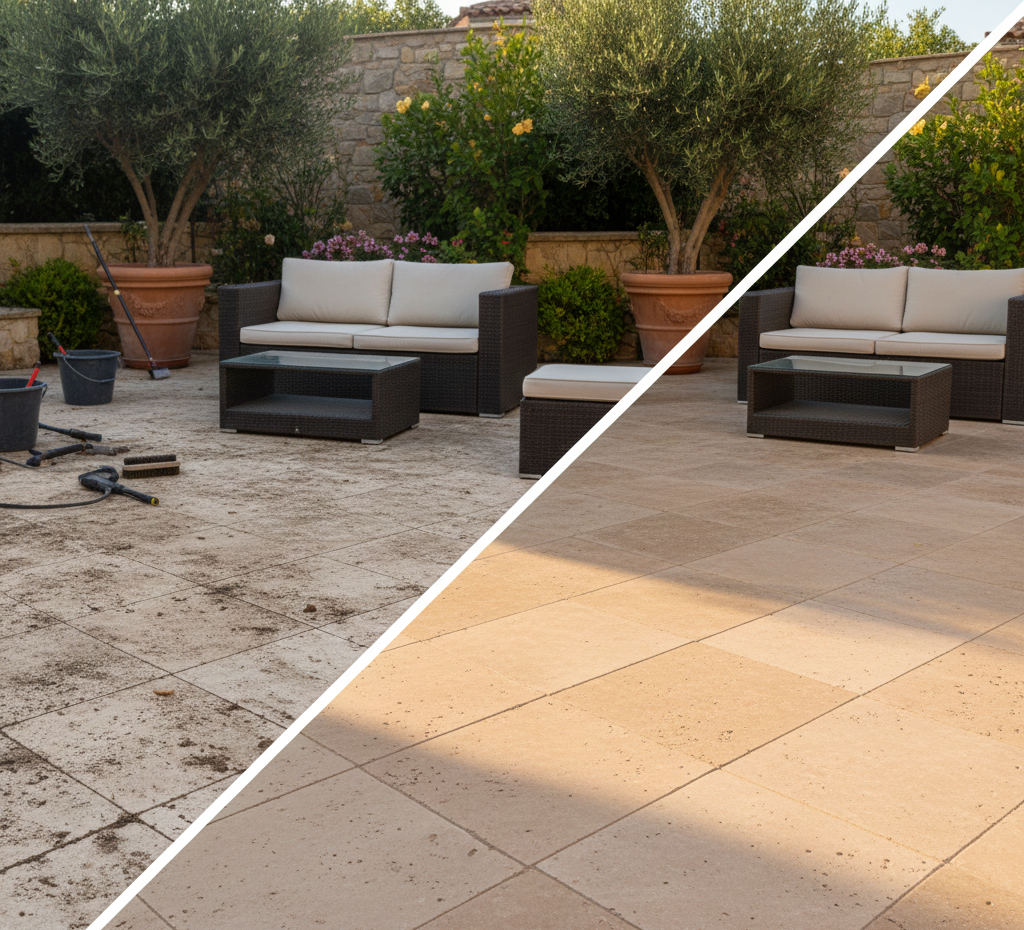
External travertine faces weather, temperature changes, UV light, and potential frost damage. Algae and moss can grow on damp stone. This is the toughest environment for travertine.
Restoration must address weathering and remove biological growth. The sealers we use for outdoor applications need to be breathable. Trapped moisture plus freezing temperatures equals cracked stone. According to guidance from the Stone Federation Great Britain, proper sealing with breathable products protects natural stone even in exposed UK weather conditions.
Making the Decision
Your travertine floor does not have to stay dull and damaged. Professional restoration brings it back to life properly and permanently. The process combines technical expertise with proper equipment and quality products to deliver lasting results.
At Master Marble, we have been working with natural stone across London for over 20 years. Travertine restoration is something we do regularly for homes and businesses throughout the city. We understand this particular stone and we know what it needs to look its best.
Similar to our marble restoration London services, our travertine work follows proven techniques that deliver consistent results. Every floor gets the same careful attention regardless of size. The same systematic approach. The same commitment to quality.
When you see your floor after restoration, the transformation is usually quite dramatic. People often say they had forgotten their floor could look this good. The stone that was hidden under years of damage is revealed again.
If your travertine floor is showing its age, get a proper professional assessment. Find out exactly what is needed and what results are realistic. Then make an informed decision based on facts rather than guesswork.
Master Marble provides free assessments for travertine floor restoration throughout London. We visit your property, examine the floor properly, and explain clearly what we would do and why. There is no pressure and no obligation. Just honest professional advice from people who have been working with stone for more than two decades.
Your travertine deserves to look beautiful again. Contact us and we will show you what can be achieved with proper professional restoration. Contact us for your travertine floor restoration London